Bear Woodland Animals Clipart: A Designer Review
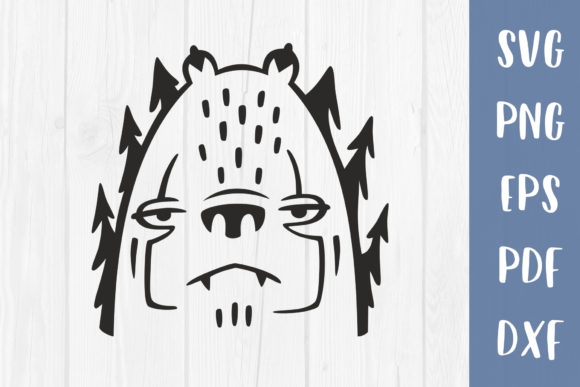
As a designer who has spent years translating digital files into tangible stitched goods, I approach every new asset with a mix of excitement and skepticism. The market is flooded with generic vectors that look fine on a screen but fall apart under the needle. When I first encountered Bear Woodland Animals Clipart, I was immediately drawn to its unique personality. This isn't your typical cute, smiling woodland creature. The description highlights a "melancholy funny bear face," which instantly signals a specific mood—something slightly off-kilter, perhaps a bit whimsical, and definitely memorable. In the world of custom apparel and handmade products, distinct character often sells better than perfection.
The Mood and Visual Impact of the Design
The first thing you notice about this Illustration is the emotional resonance. Most bear designs aim for cuteness or ruggedness, but this one leans into a humorous sadness. For an embroidery project, this creates an immediate conversation starter. Imagine a customer wearing a sweatshirt featuring this design; they aren't just wearing a bear, they are making a statement. The visual layout appears clean, which is crucial when we move from a flat PNG file to a three-dimensional embroidered patch or garment decoration.
However, the transition from a Graphics file intended for printing and cutting to a machine embroidery design requires careful thought. The "funny" aspect relies heavily on facial expressions—the curve of the mouth, the droop of the eyes. If these details are lost in translation to thread, the humor vanishes. As a reviewer, my primary concern is whether the line weight in the SVG file is substantial enough to hold up as satin stitch or fill stitch without looking muddy or disappearing into the fabric texture.
Real-World Application: The Custom Tote Bag Scenario
To truly test the viability of Bear Woodland Animals Clipart, let's walk through a real-life scenario. Picture yourself running a small shop product line on Etsy. You want to create a limited run of canvas tote bags featuring this melancholy bear. You have the ZIP file containing the PNG and SVG. Your plan is to use the SVG for a cutting machine to create a vinyl applique, or perhaps convert it into a digital embroidery file for a more textured, premium look.
If you choose the embroidery route, the process begins with digitizing. Since the original file is a vector (SVG), the paths are likely smooth, which is excellent. However, the "melancholy" expression means there are subtle gradients or shading that might be present in the PNG version. In embroidery, we cannot replicate complex shading easily. We must simplify. You would need to decide if the bear's face will be a solid block of color using fill stitch, or if you can incorporate some running stitch to suggest texture.
Let's say you opt for a custom apparel approach on a heavy cotton sweatshirt. The bear's face needs to pop against the dark grey fabric. Here, the choice of thread colors becomes critical. A light beige or cream thread for the bear against the dark background ensures visibility. But you must check the stitch density. If the design is too dense, the fabric will pucker, ruining the drape of the sweatshirt. If it's too sparse, the backing will show through, and the "funny" details will get lost. This is where the practical judgment of a seasoned maker comes in. You might need to adjust the size significantly to ensure the details remain crisp.
Navigating Fabric and Hoop Challenges
Not all fabrics play nice with detailed faces. If you attempt this design on thin jersey knit or stretchy fabric, the hoop size and stabilizer choice become non-negotiable. Without a strong tear-away or cut-away stabilizer, the tension of the needle pulling the thread could distort the bear's face, turning a "funny" look into a "distorted" mess. Similarly, curved surfaces like caps require a specialized cap hoop. The flat geometry of the original Bear Woodland Animals Clipart might warp if forced onto a rounded surface without proper digitization adjustments.
Texture also plays a role. On a nubby wool blanket or a rough linen tea towel, fine details in the bear's eyes or nose might get swallowed by the fabric weave. In such cases, simplifying the design or increasing the scale is necessary. For a handmade product meant for a nursery, like a baby onesie, softness is key. You would avoid thick, dense stitching that feels scratchy against a baby's skin. Instead, a lighter touch with fewer layers of fill stitch would be preferable.
Commercial Viability and Brand Consistency
For the Etsy seller or small business owner, consistency is everything. Using Bear Woodland Animals Clipart across different product lines—from embroidered patches to pillow covers—can create a cohesive brand identity. The unique "melancholy funny" vibe sets your shop apart from competitors selling standard teddy bears. It appeals to a niche audience that appreciates quirkiness and humor.
However, before launching a full collection, you must verify the licensing terms included in the ZIP file. Does the license allow for commercial use of finished goods? Can you sell the digital file itself? The description mentions it is perfect for tattoos and cutting machines, but it does not explicitly state the commercial rights for embroidery resale. Always confirm this before investing time in creating mockups or listing items for sale. Selling a product based on a restricted asset can lead to account bans and legal trouble.
Practical Steps Before Production
Before committing to a large batch of holiday gifts or boutique merchandise, follow these essential steps:
- Test on Scrap Fabric: Never skip the test run. Stitch the design on a piece of the exact fabric you intend to use. Check how the colors blend and if the details hold up.
- Review Contrast: Ensure the thread colors provide enough contrast against the fabric. A dark bear on a dark shirt is invisible; a light bear on a light shirt gets lost.
- Check Stabilizer Needs: Determine if you need a water-soluble topping for fuzzy fabrics or a heavy stabilizer for knits.
- Mockup in Black and White: Create a printable mockup in grayscale to see if the design holds its shape without relying on color.
- Verify File Integrity: Open the SVG in your design software to ensure all nodes are connected and there are no stray points that could cause stitching errors.
Final Thoughts on Value and Execution
Bear Woodland Animals Clipart offers a refreshing alternative to the sea of generic animal designs flooding the market. Its potential lies in its personality. When executed correctly, it transforms a simple garment into a piece of wearable art. Whether used for a personalized gift, a commercial embroidery project, or a unique tote bag design, the success of the final product depends entirely on the designer's ability to adapt the digital file to the physical constraints of thread and fabric.
It is not a plug-and-play solution for every situation. It demands attention to detail, particularly regarding stitch count and placement. But for the creative entrepreneur willing to put in the work, this design asset provides a strong foundation for building a recognizable and beloved product line. Just remember: the magic happens not in the download, but in the thoughtful execution of the stitch.